

Triglycerides are the most changeable line on a cholesterol test. A heavy dinner the night before, two drinks, or a large glass of fruit juice in the morning can all move this number. That is also the good news: triglycerides respond to lifestyle changes much faster and much more strongly than LDL cholesterol. According to a scientific statement from the American Heart Association, changes in weight, diet and physical activity together can cut triglycerides by half or more.
In this article I will explain why triglycerides rise, which level is urgent, and how well diet, alcohol reduction, fish oil and medication really work. I described where triglycerides sit in the blood in what is cholesterol, and the ways to lower LDL in how to lower cholesterol.
What are triglycerides, and where do they come from?
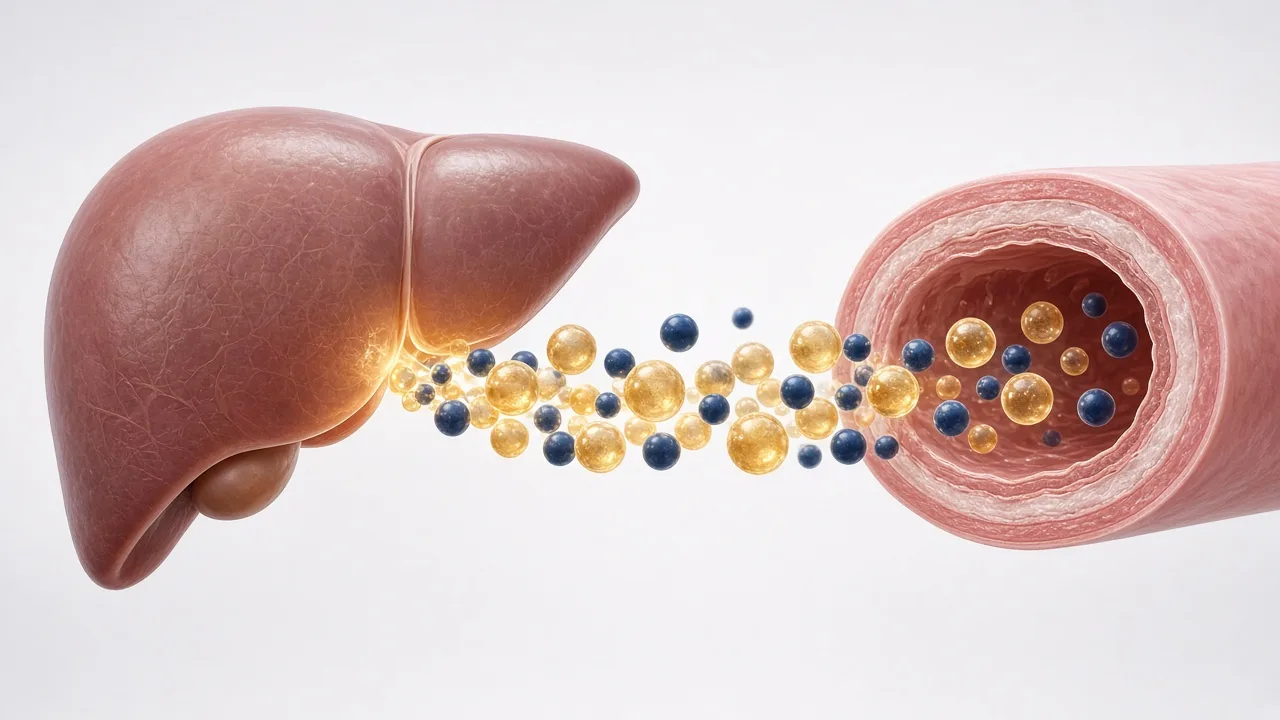
Triglycerides are the body’s stored fat, its energy reserve. Part of the fat we eat passes into the blood directly as triglycerides. But most of the triglyceride measured on an empty stomach is made by the liver. The liver turns surplus energy, especially sugar, white flour and alcohol, into triglycerides, loads them into packages called VLDL and sends them into the blood.
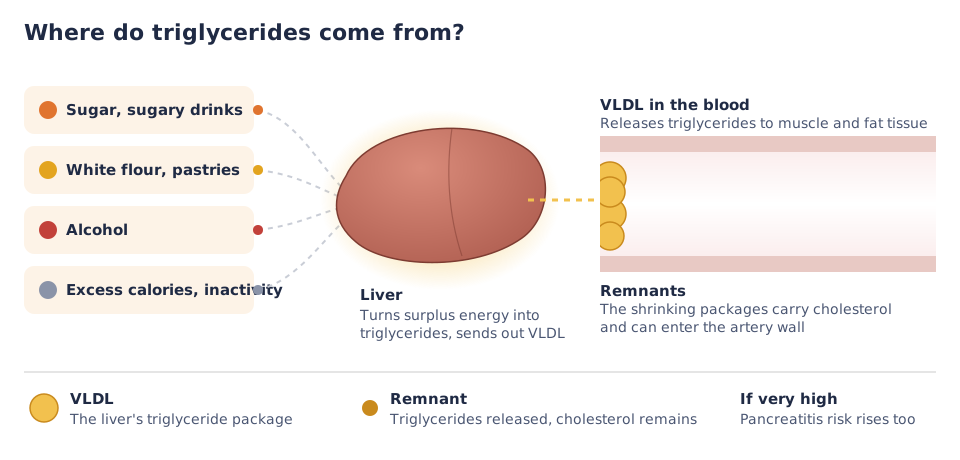
High triglycerides carry two separate costs. The first concerns the arteries: VLDL and its remnants carry cholesterol and can enter the artery wall. A consensus statement from the European Atherosclerosis Society reports that these remnants contribute to atherosclerosis. That is why, in someone with high triglycerides, I look not only at LDL but also at ApoB and non-HDL cholesterol. The second concerns the pancreas: when triglycerides climb very high, the pancreas can become inflamed.
What level counts as high?
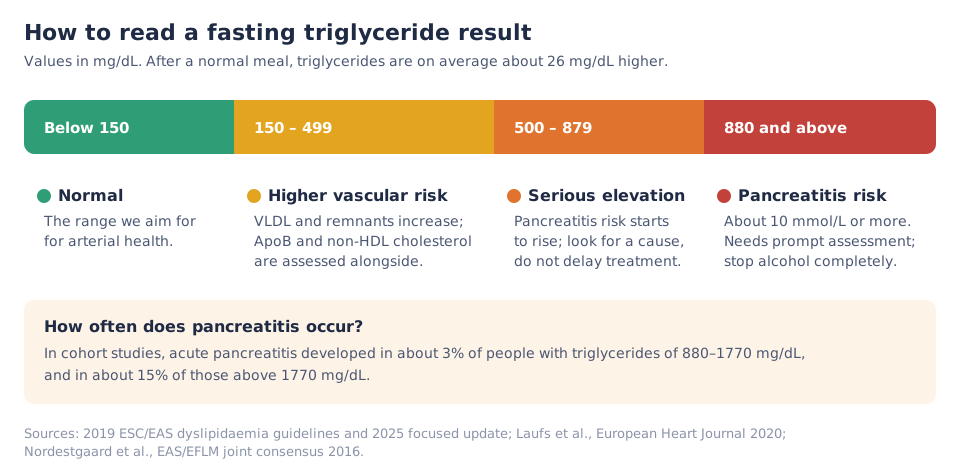
European guidelines treat a fasting level above 150 mg/dL as increased vascular risk. Above 880 mg/dL (about 10 mmol/L), triglycerides must be brought down quickly to prevent pancreatitis. Most people at this level never develop pancreatitis, but when it happens it is serious. In cohort studies, acute pancreatitis occurred in about 3% of people with triglycerides of 880–1770 mg/dL and in about 15% of those above that.
In a non-fasting test, triglycerides come out on average about 26 mg/dL higher. That is not a problem for a routine check. If a non-fasting triglyceride is above 440 mg/dL, I repeat the test after a 10–12 hour fast.
Look for the cause first
High triglycerides are usually several factors stacked on top of each other: a genetic tendency, excess weight, and a second cause added on top. Before deciding on medication, I look for these causes:
- Poorly controlled diabetes and insulin resistance
- An underactive thyroid
- Kidney disease, especially with protein in the urine
- Fatty liver
- Alcohol
- Some medicines: corticosteroids, oral oestrogen, tamoxifen, thiazide diuretics, non-selective beta blockers, some HIV medicines and some psychiatric medicines
- Pregnancy: triglycerides rise naturally in the last months; someone who already had high levels needs closer follow-up
When one of these causes is found, correcting it often brings a bigger fall than any medicine. If you think a medicine you take is raising your triglycerides, do not stop it yourself; review it with the doctor who prescribed it.
There is also a very rare condition: familial chylomicronaemia syndrome. Here the enzyme system that clears fat from the blood does not work from birth. Triglycerides run into the thousands and pancreatitis can recur. These patients follow a very low-fat diet and are cared for in specialist centres.
Lifestyle: the strongest triglyceride medicine
Weight
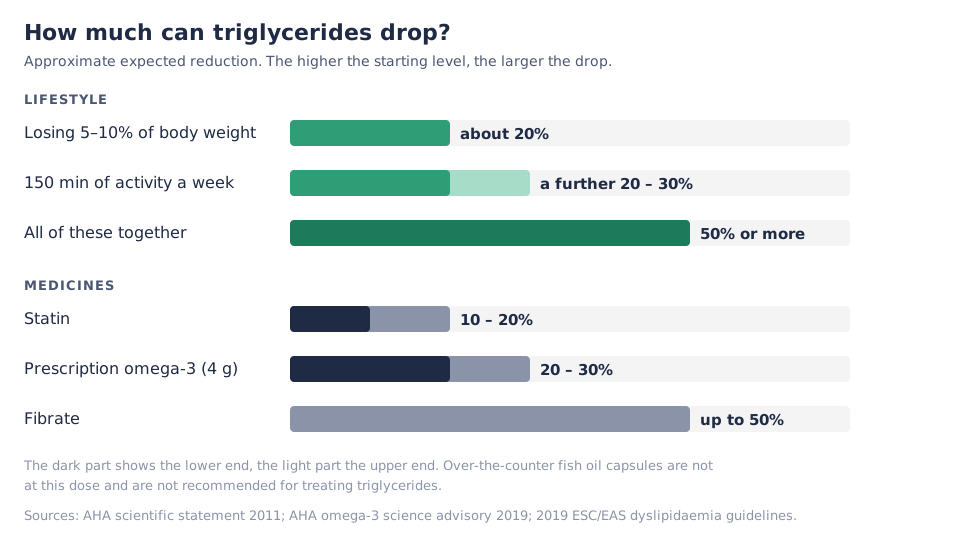
When someone with excess weight loses 5–10% of their body weight, triglycerides fall by about 20%. As belly fat shrinks, the liver also makes less VLDL. The goal is not a fast, harsh diet but a routine you can keep.
Sugar and white flour
Sugar and white flour raise triglycerides fastest. The European guideline reports that triglycerides rise when more than 10% of daily energy comes from fructose, and that they can increase by 30–40% when this share reaches 15–20%. Half of table sugar is fructose. So I pay attention to:
- Cola, fizzy drinks, packaged fruit juice and energy drinks. Even a glass of freshly squeezed orange juice gives you the sugar of several oranges without the fibre.
- Honey, grape molasses and jam. Being natural does not mean they are not sugar.
- Syrup-soaked desserts, cakes and biscuits
- Large portions of white bread, simit, pastries, börek and white rice pilaf
Whole fresh fruit is different. Two or three portions a day, with their fibre and filling effect, cause no problem for most people. Replacing part of your carbohydrate with unsaturated fats such as olive oil, walnuts or fish also lowers triglycerides.
Alcohol
Alcohol directly increases triglyceride production in the liver. For someone with normal triglycerides, up to one drink a day is an acceptable limit. But if triglycerides are high, I advise stopping alcohol rather than cutting down. If triglycerides are above 880 mg/dL, alcohol should be stopped completely, because alcohol is a separate trigger for pancreatitis.
Physical activity
According to the American Heart Association, at least 150 minutes a week of moderate activity such as brisk walking can lower triglycerides by a further 20–30%. Working muscle uses triglycerides from the blood as fuel. The higher the starting level, the clearer the effect.
Fish
The European prevention guideline recommends eating oily fish once or twice a week. Anchovies, sardines, mackerel and bonito are good choices. Grilling, steaming or baking fish is better than frying it. I give examples of a weekly routine with fish in a diet that puts your arteries first.
Fish oil: which one, and for whom?
This is the most confusing topic, because very different products are sold under the name “fish oil.”
Supplements sold in supermarkets and pharmacies are usually low-dose, and their contents are not regulated like medicines. The American Heart Association does not recommend them for treating triglycerides.
High-dose prescription omega-3 is taken at 4 grams a day and lowers triglycerides by about 20–30%. But a fall in triglycerides does not mean fewer heart attacks. Two large trials answered this question differently:
- In REDUCE-IT, 8,179 people on a statin, with triglycerides of 135–499 mg/dL and either cardiovascular disease or diabetes plus other risk factors, received icosapent ethyl (pure EPA, 4 grams a day) or placebo. Over a median 4.9 years, the combined rate of cardiovascular death, heart attack, stroke, artery-opening procedures and unstable angina was 17.2% on the drug and 22.0% on placebo. However, a heart rhythm disorder called atrial fibrillation was more common on the drug (5.3% versus 3.9%), and serious bleeding tended to be more common (2.7% versus 2.1%).
- In STRENGTH, a different prescription omega-3 containing a mix of EPA and DHA was tested at the same dose in 13,078 high-risk people. Cardiovascular events were almost identical in the two groups (12.0% versus 12.2%), and the trial was stopped early.
Why the two results differ is still debated. The drugs were different. So were the placebos: REDUCE-IT used mineral oil and STRENGTH used corn oil. It has been suggested that mineral oil may have worsened some values in the placebo group. For this reason, the 2025 European guideline update narrowed its advice: only high-dose icosapent ethyl may be considered, in high or very-high-risk patients whose triglycerides remain at 135–499 mg/dL despite a statin. Availability differs between countries. In a patient with a history of rhythm problems or who takes a blood thinner, I discuss this decision separately.
Statins, fibrates and other medicines
Statins are the first-choice medicine in a high-risk patient, even when triglycerides are high. They usually lower triglycerides by 10–20%, but their real strength comes from lowering LDL and from proven reductions in heart attacks. The European prevention guideline suggests considering medication for triglycerides in high-risk people whose levels stay above 200 mg/dL despite lifestyle measures.
Fibrates can lower triglycerides by up to 50%. But in patients already taking a statin, they have not been shown to reduce heart attacks and strokes. In PROMINENT, which tested a newer fibrate called pemafibrate in 10,497 people with diabetes, triglycerides fell 26% more than with placebo, yet cardiovascular events did not fall. ApoB and LDL even rose slightly. So I use fibrates mainly when triglycerides are very high, to prevent pancreatitis. Gemfibrozil is not combined with a statin, because it raises the risk of muscle side effects.
Good diabetes control is also a triglyceride treatment. As blood sugar improves, triglycerides often fall markedly.
New medicines have been developed for familial chylomicronaemia syndrome. They work by reducing production of a protein called apoC-III in the liver. In Europe, volanesorsen was included among the recommended medicines for these patients in the 2025 guideline update. Olezarsen was approved in the United States for this condition in 2024; in a 66-patient trial, there were 11 episodes of pancreatitis in the placebo group over one year and 2 in total in the drug groups. These medicines are for this very rare condition, and access to them is limited.
When to seek urgent care
If your triglycerides are above 880 mg/dL, do not leave it until your next routine visit; see your doctor within the same week. If you have severe pain in the upper abdomen spreading to the back, with nausea and vomiting, go to an emergency department the same day. This may be pancreatitis.
Conclusion
Triglycerides are the line on a cholesterol test that improves fastest. Finding the cause first, then tackling weight, sugar, white flour and alcohol, brings a bigger fall than medication for most people. Over-the-counter fish oil is not the answer. In a high-risk patient the first medicine is a statin; in some patients high-dose icosapent ethyl may be added. When triglycerides are very high, the goal is to protect the pancreas before the arteries.
If you would like your triglyceride results assessed together with your vascular health, you can request an appointment through our contact page.
Frequently asked questions
My triglycerides came back at 220. Do I need medication?
Usually not at first. We first look for causes and try lifestyle changes. The decision depends not on the triglyceride value alone but on your LDL, your ApoB and your overall cardiovascular risk. If you are at high risk, reaching your LDL target still comes first.
Should I take fish oil capsules?
I do not recommend over-the-counter capsules to lower triglycerides. Eating oily fish once or twice a week is a better start. Whether high-dose prescription omega-3 suits you is a decision your doctor makes based on your risk.
Does fruit raise triglycerides?
Two or three portions of fresh fruit a day cause no problem for most people. The problem lies more in fruit juice, large amounts of dried fruit, honey and grape molasses.
How quickly do triglycerides fall?
When alcohol and sugar are cut, triglycerides start to fall within days to weeks. To see the effect of a change, I usually recheck after 6–12 weeks.
I am slim, but my triglycerides are high. Why?
Genes also set triglyceride levels. Alcohol, sugary drinks, thyroid and kidney disease and some medicines can raise triglycerides in slim people too. If there is a family history of very high triglycerides or pancreatitis at a young age, tell your doctor.
Scientific sources:
- Mach F, Baigent C, Catapano AL, et al. 2019 ESC/EAS Guidelines for the management of dyslipidaemias. European Heart Journal. 2020;41:111–188.
- Mach F, Koskinas KC, Roeters van Lennep JE, et al. 2025 Focused Update of the 2019 ESC/EAS Dyslipidaemia Guidelines. European Heart Journal. 2025;46:4359–4378.
- Visseren FLJ, Mach F, Smulders YM, et al. 2021 ESC Guidelines on cardiovascular disease prevention in clinical practice. European Heart Journal. 2021;42:3227–3337.
- Miller M, Stone NJ, Ballantyne C, et al. Triglycerides and cardiovascular disease: a scientific statement from the American Heart Association. Circulation. 2011;123:2292–2333.
- Skulas-Ray AC, Wilson PWF, Harris WS, et al. Omega-3 fatty acids for the management of hypertriglyceridemia: a science advisory from the American Heart Association. Circulation. 2019;140:e673–e691.
- Laufs U, Parhofer KG, Ginsberg HN, Hegele RA. Clinical review on triglycerides. European Heart Journal. 2020;41:99–109c.
- Ginsberg HN, Packard CJ, Chapman MJ, et al. Triglyceride-rich lipoproteins and their remnants: a European Atherosclerosis Society consensus statement. European Heart Journal. 2021;42:4791–4806.
- Bhatt DL, Steg PG, Miller M, et al. Cardiovascular risk reduction with icosapent ethyl for hypertriglyceridemia (REDUCE-IT). New England Journal of Medicine. 2019;380:11–22.
- Nicholls SJ, Lincoff AM, Garcia M, et al. Effect of high-dose omega-3 fatty acids vs corn oil on major adverse cardiovascular events in patients at high cardiovascular risk (STRENGTH). JAMA. 2020;324:2268–2280.
- Das Pradhan A, Glynn RJ, Fruchart JC, et al. Triglyceride lowering with pemafibrate to reduce cardiovascular risk (PROMINENT). New England Journal of Medicine. 2022;387:1923–1934.
- Stroes ESG, Alexander VJ, Karwatowska-Prokopczuk E, et al. Olezarsen, acute pancreatitis, and familial chylomicronemia syndrome. New England Journal of Medicine. 2024;390:1781–1792.
- Nordestgaard BG, Langsted A, Mora S, et al. Fasting is not routinely required for determination of a lipid profile: a joint consensus statement from the EAS and EFLM. European Heart Journal. 2016;37:1944–1958.
This article is for general information only and does not replace a medical diagnosis or personal treatment advice. Do not stop or change your medicines without talking to your doctor. Medicine choice and dose should be determined by your doctor based on your risk assessment. The images in this article are AI-generated illustrative images; they do not show a real person, patient or brand.