


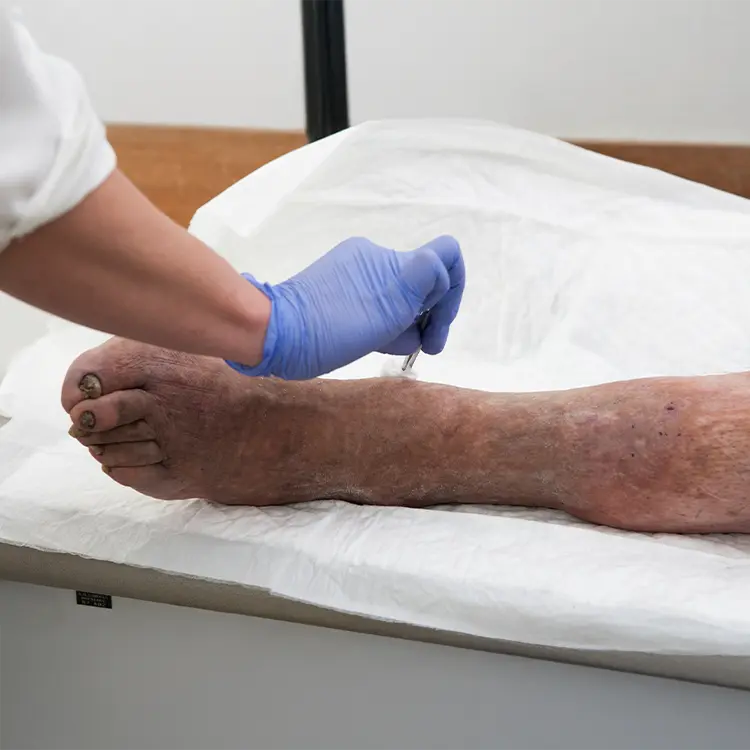
A diabetic foot wound may begin quietly. Because diabetes can damage nerves and reduce pain sensation, a small blister, callus or crack can progress before the patient realizes how serious it is.
Why Do Diabetic Foot Wounds Occur?
Diabetic foot wounds often develop from a combination of neuropathy, poor circulation, pressure points, infection risk and reduced wound healing capacity. When arterial disease is also present, even a small wound may become dangerous.
Early Signs
- Callus, especially under pressure points
- Redness or warmth
- Cracks between the toes or on the heel
- Blisters from shoes
- Color change in toes
- Drainage, odor or skin breakdown
- Numbness, burning or tingling
When Should You See a Doctor Without Waiting?
- A wound does not improve quickly
- There is black discoloration
- Redness spreads around the wound
- Fever, odor or discharge develops
- The foot becomes cold or pale
- Pain appears despite numbness
How Is Treatment Planned?
Treatment includes wound assessment, infection control, pressure offloading, blood sugar management and vascular evaluation. If blood flow is insufficient, revascularization with angioplasty, stenting or bypass may be needed before the wound can heal.
How Can Diabetic Foot Wounds Be Prevented?
- Inspect both feet every day
- Use properly fitting shoes
- Never cut calluses deeply at home
- Keep skin moisturized but dry between toes
- Control blood sugar, blood pressure and cholesterol
- Stop smoking
- Seek early care for any wound
Frequently Asked Questions
Does a diabetic foot wound always hurt?
No. Nerve damage can reduce pain sensation.
Can it heal with home dressings alone?
Not always. Circulation, infection and pressure must be assessed.
Is callus dangerous in diabetes?
It can be. Callus may hide pressure damage underneath.
Related: Foot Wound Due to Artery Blockage and Chronic Wound Treatment.