

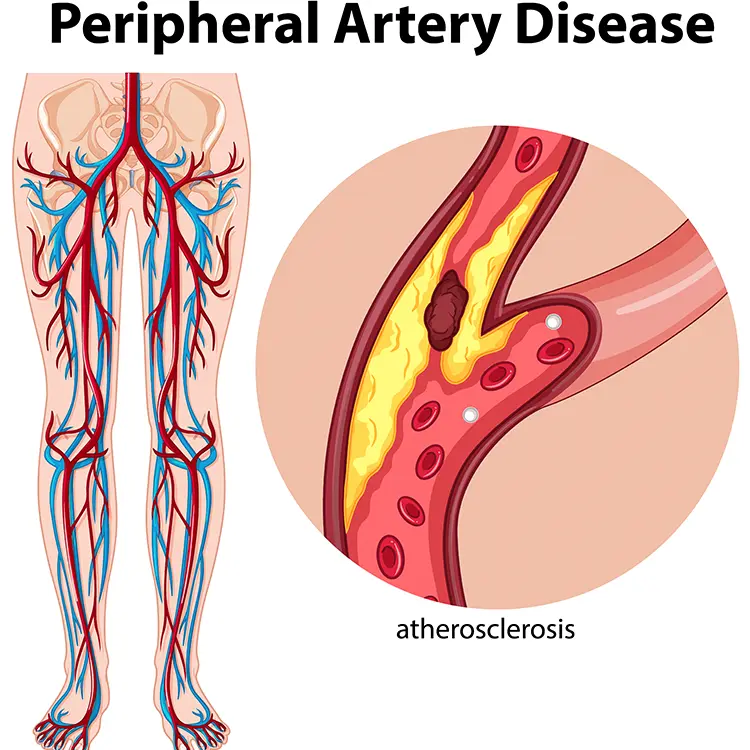
A foot wound caused by poor arterial blood flow can become dangerous quickly. If oxygen and nutrients cannot reach the tissue, even a small wound may fail to heal and may progress to tissue loss.
Why Does Artery Blockage Cause Foot Wounds?
Artery blockage reduces blood flow to the toes and foot. The skin becomes vulnerable, pressure areas break down more easily and the body’s ability to fight infection and repair tissue decreases.
Danger Signs
- Black discoloration of a toe or wound edge
- Rest pain, especially at night
- Cold or pale foot
- Wound that becomes larger despite care
- Bad odor, pus or spreading redness
- Known diabetes with any new foot wound
Why Is Risk Higher in Diabetes?
Diabetes can reduce pain sensation and damage blood vessels. A patient may continue walking on a wound without feeling it. Infection can progress faster, especially when circulation is poor.
How Is Diagnosis Made?
Vascular assessment may include pulse examination, Doppler ultrasound, ankle-brachial index, toe pressure, CT angiography or conventional angiography. Wound culture and infection assessment may also be needed.
How Is Treatment Planned?
Treatment aims to restore blood flow, control infection, remove dead tissue when needed, reduce pressure on the wound and optimize diabetes and vascular risk factors. Angioplasty, stenting or bypass may be considered depending on anatomy.
Common Home-Care Mistakes
- Waiting too long because the wound is small
- Using harsh antiseptics repeatedly
- Applying unapproved herbal products
- Cutting callus or dead tissue at home
- Walking without pressure protection
Related: Critical Limb Ischemia and Diabetic Foot Wound.