

What Does da Vinci Add in Robotic Bypass Surgery?
“You said bypass… but will you open my chest completely?” In clinic, that question is often followed by another: “They have a robot — what does it do in bypass?” The fear is usually not the blocked artery itself; it is the large incision. Robotic bypass enters the conversation right there — but not every bypass is done robotically, and this topic should stay focused on bypass alone.
Information note: This article is for general education only and does not replace medical advice. Seek emergency care for sudden chest pain, severe shortness of breath, or fainting.
If you are weighing options, see stent or bypass for coronary artery disease and where bypass graft vessels come from.
What is robotic bypass, and what does da Vinci do?
Short answer: The same surgical goal as conventional bypass — building a new blood route past a blockage — through small incisions and robot arms controlled by the surgeon at a console.
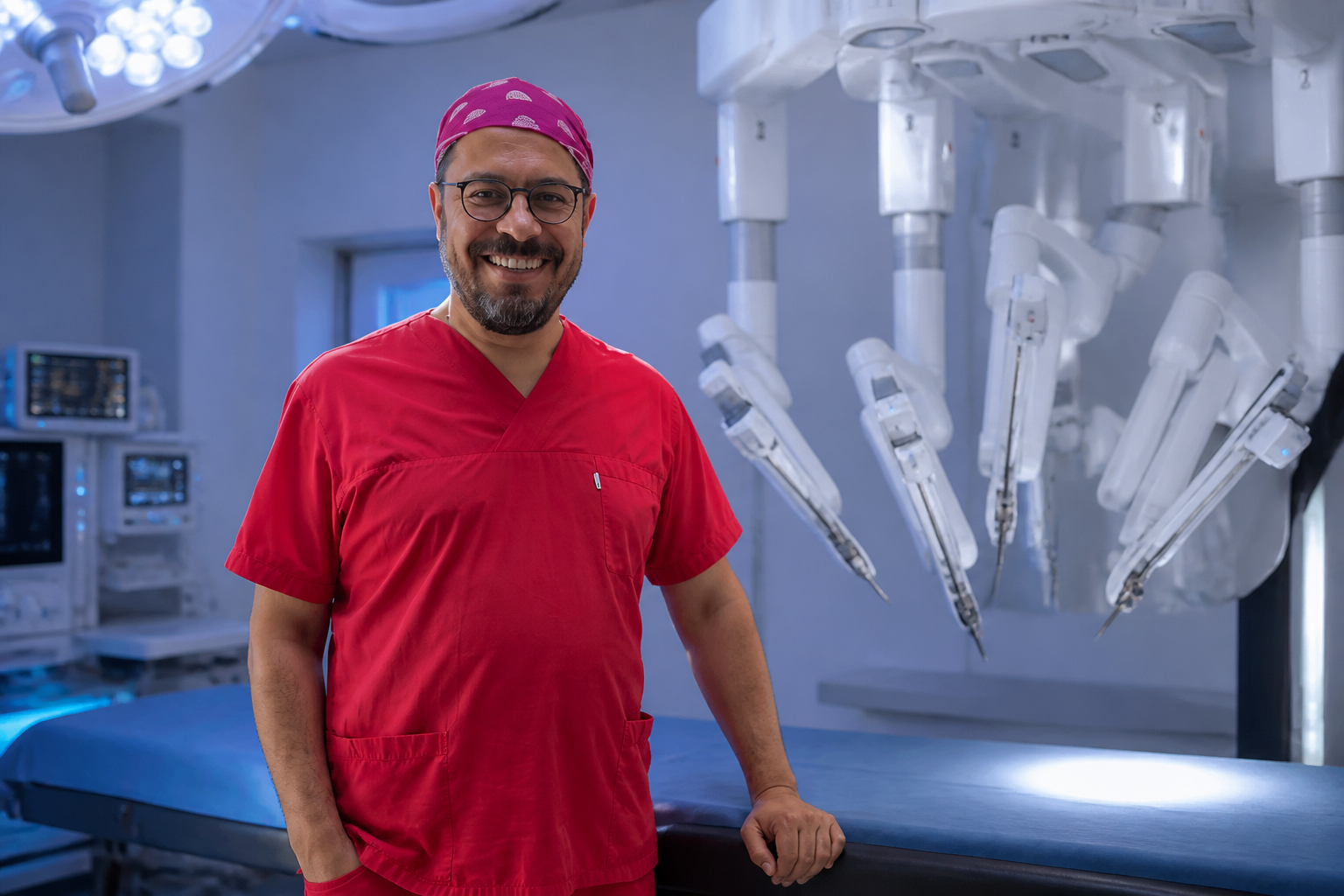
In classic bypass, the breastbone (sternum) is opened for wide access to the heart. In robotic bypass (often called robot-assisted CABG or totally endoscopic coronary artery bypass / TECAB in the literature), several small ports are used; the da Vinci system translates the surgeon’s hand movements to robotic instruments. The robot does not operate alone. It offers 3D vision, tremor filtering, and controlled movement in tight spaces.
In bypass specifically, the most common target is connecting the internal mammary artery (LIMA) to the left anterior descending artery (LAD). LAD disease is often the most critical line in the map; robotic approaches frequently focus on this graft.
What does da Vinci add in bypass?
Short answer: In selected patients it aims to reach the same bypass logic without full sternotomy; comfort and early mobility may improve in some cases.
Think of the practical contributions this way:
- Avoiding full sternotomy: Small ports and limited incisions; access between ribs or through a mini incision.
- More controlled LIMA preparation: Magnified view and stable instruments can help in fine dissection.
- Less tissue trauma: Not the same in everyone; in suitable anatomy, pain and early walking may be easier.
- Room for hybrid planning: LIMA-LAD robotically plus stenting (PCI) to other vessels in the same session or later — not “everything in one go” for all, but a Heart Team decision.
Do not oversell it: robot does not mean “better bypass.” Open bypass remains the long-proven standard in experienced hands. The robot is an alternative path in the right candidate.
Who might be considered for robotic bypass?
Short answer: Mostly selected non-emergency patients who need single-vessel (especially LAD) bypass, where avoiding sternotomy matters, anatomy fits, and the center has experience.
Broad criteria:
- LIMA to LAD is planned and LIMA quality is suitable
- No prior major chest surgery or heavy adhesions
- Not an acute infarction or unstable presentation
- Comorbidities do not make robotic access impractical
- The center has robotic bypass volume and backup for conversion to open surgery
With strong family history, multi-vessel disease, or complex diabetes-related anatomy, the plan more often shifts toward open bypass or a hybrid approach.
Who is it not for?
Short answer: Multi-vessel disease, emergencies, poor graft or target quality, or cases where the team considers open surgery safer.
It is usually not chosen in three-vessel disease better served by open bypass, emergencies, poor LIMA or target quality, or when the team does not find the robotic route safe. Sometimes the best news is: “Classic bypass is safer for you.”
Open vs robotic bypass: practical differences
Short answer: Same surgical goal; access, incision, and recovery comfort may differ.
| Open bypass | Robotic bypass (selected) | |
|---|---|---|
| Access | Sternotomy | Small ports / mini incisions |
| Vessel count | Multi-graft routine | Often LIMA-LAD; full multi-graft robotic less common |
| OR time | Known ranges | Often longer early in a program |
| Recovery | Sternum healing over weeks | Different comfort profile without sternotomy |
| Evidence | Decades of broad data | Promising in selected cohorts; not all scenarios |
For recovery details, see recovery after bypass surgery. For general robotic heart surgery (valve, etc.), is robotic heart surgery reliable complements this article — this piece is bypass-only.
Surgery day and after: set expectations correctly
Short answer: Small incisions do not mean a “light” operation; heart support, graft preparation, and ICU care remain serious.
Robotic bypass is still under general anesthesia and may use cardiopulmonary bypass or other support strategies depending on the center. After discharge, medications, wound care, walking, smoking cessation, and follow-up depend on the same discipline as open bypass.
At home, seek urgent care for worsening chest pain, breathlessness, irregular heartbeat, sudden leg swelling, or wound infection signs.
Questions worth asking in clinic
- Is robotic LIMA-LAD realistically possible on my angiogram?
- How many vessels need bypass — all robotic, hybrid, or open?
- What is the chance of converting to open surgery during the case?
- Besides LIMA, are saphenous vein or radial artery grafts planned?
- Expected hospital stay and return-to-work timeline?
- What is your center’s volume and outcomes for robotic bypass?
You can request an appointment via the contact page.
Frequently Asked Questions
Does the robot perform bypass by itself?
No. da Vinci is surgeon-controlled from a console. Graft strategy, vessel preparation, and anastomoses remain with the physician.
Is robotic bypass done for every bypass patient?
No. Multi-vessel disease, emergencies, and unsuitable anatomy usually favor open bypass or another strategy.
Is robotic bypass safer?
In selected patients at experienced centers it can be a reliable alternative; it is not “safer for everyone.” Risk follows the patient and team more than the label on the technique.
What is hybrid bypass?
Planning critical grafts (e.g. LIMA-LAD) minimally invasively or robotically and addressing other vessels with catheter/stent — not suitable for every patient.
Are grafts still from my own vessels?
Yes. The robotic approach does not change graft source; LIMA, saphenous vein, or radial artery is chosen by anatomy.
Scientific Sources
- American Heart Association — Coronary Artery Bypass Grafting overview
- PubMed — Robotic-assisted minimally invasive direct coronary artery bypass (MIDCAB) outcomes
- PubMed — Totally endoscopic coronary artery bypass (TECAB) systematic review
- European Society of Cardiology — revascularization guidelines (Heart Team approach)