


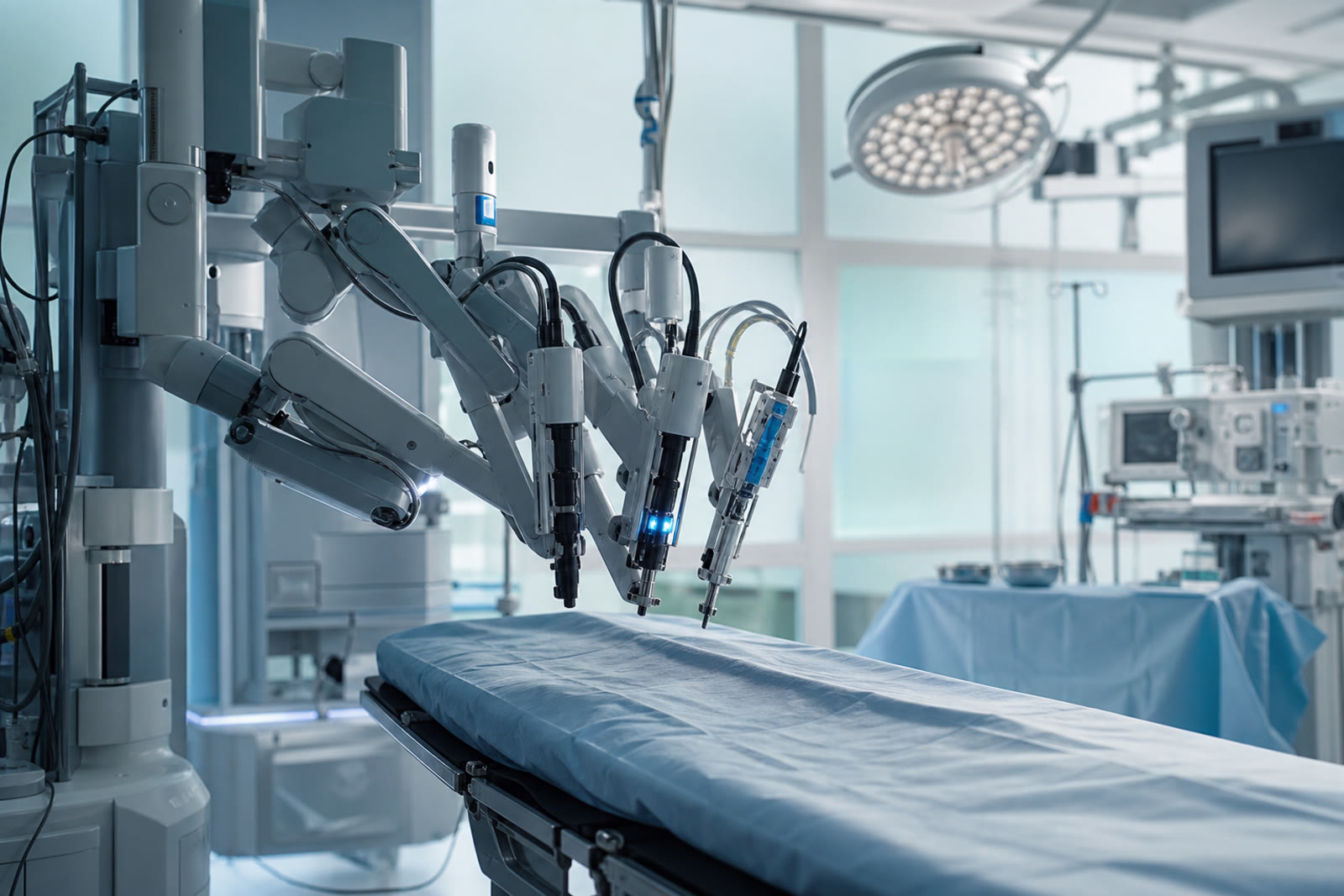
Why are robots used in heart surgery? And, just as importantly: is robotic heart surgery reliable? Patients often ask these questions together, because the word “robot” can create both hope and uncertainty. In reality, the robot is not an autonomous machine that replaces the surgeon. A robotic system is an advanced surgical tool that enhances precision, enables access through smaller incisions, and provides high-definition three-dimensional visualization—while the surgeon remains fully in control.
This article explains what robotic cardiac surgery means, when it may be considered, what scientific evidence says about safety, and which questions you should ask before deciding—written in clear language with a strong clinical foundation.
What is robotic heart surgery? Does the robot operate alone?
In clinical practice, “robotic surgery” usually describes an operation performed with robotic arms controlled by the surgeon from a console. The surgeon stays in the operating room; the robot does not decide or sew on its own. Its main contributions are:
- Working through smaller side incisions (approaches that may avoid full sternotomy)
- Instruments that can filter tremor and scale hand motion
- High-resolution, three-dimensional vision
- More controlled movement in narrow anatomical spaces
So reliability depends less on the machine brand and more on patient selection, team experience, hospital infrastructure, and postoperative follow-up. This is the same principle seen in the stent versus bypass discussion: technology helps only when applied to the right patient.
Why use a robot in cardiac surgery?
Traditional open-heart surgery with sternotomy remains a safe and foundational approach for many operations. In selected patients, however—especially certain valve conditions—the same surgical goal can be reached through smaller incisions with better recovery comfort. Common reasons to consider a robotic approach include:
- Less tissue trauma: Small ports and limited incisions instead of a large opening.
- Improved visualization and precision: Particularly useful for fine leaflet work in mitral valve repair.
- Potential for shorter ICU and hospital stay: In suitable patients, pain and early mobilization may improve.
- Cosmetic and psychological benefit: Avoiding a midline scar matters for some patients—but safety and durability always come first.
Robotic cardiac surgery is most often discussed for degenerative mitral valve repair. Selected tricuspid procedures, some atrial septal defect closures, and certain atrial fibrillation ablation strategies may also be performed robotically in experienced centers. Not every coronary blockage or bypass need is a robotic candidate; anatomy and risk profile guide the choice. For a broader overview of arterial disease, see arterial diseases.
Is robotic heart surgery reliable? What does the evidence say?
Short answer: In the right patient, at an experienced center—yes, robotic heart surgery can be a reliable option. The strongest evidence base is for robotic mitral valve repair.
Systematic reviews and meta-analyses show that early mortality and major complication rates after robot-assisted mitral repair are comparable to sternotomy and other minimally invasive approaches. One synthesis reported short-term mortality around 1%, with low rates of stroke, renal failure, and reoperation for bleeding (PMC: Outcomes of robotic repair for the degenerative mitral valve).
Comparative analyses note longer operative times with robotics, but also possible advantages in early atrial fibrillation, pain, ICU/hospital length of stay, and physical recovery versus conventional sternotomy (PubMed: Robot-Assisted Mitral Valve Repair meta-analysis). High-volume series report high repair rates and strong long-term freedom from reoperation (Annals of Cardiothoracic Surgery — robotic mitral repair evolution).
None of this means “the robot is a miracle for everyone.” Reliability rests on three pillars:
- Patient selection: anatomy, comorbidities, aortic/peripheral vessel status, prior surgery
- Surgeon and team experience: the learning curve is long; outcomes are more consistent at high volume
- Center infrastructure: anesthesia, perfusion, ICU, and ability to convert to open surgery
International societies emphasize that minimally invasive and robotic techniques can be meaningful alternatives in selected patients when quality and safety metrics are closely tracked. Shared decision-making remains essential (American Heart Association — cardiovascular disease overview).
Who may be a candidate for robotic cardiac surgery?
Patients more often evaluated for a robotic approach include:
- Those with degenerative mitral regurgitation suitable for surgical repair
- Cases where avoiding sternotomy may offer recovery advantages
- Patients whose peripheral vessels and cardiac anatomy allow robotic access
- Those without extensive prior thoracic/abdominal surgery or dense adhesions
By contrast, emergencies, complex multivessel disease, heavy calcification, unsuitable vascular access, or situations where the team judges open surgery safer may exclude robotics. Sometimes the honest answer to “Is a robot possible?” is “Possible, but not the safest option for you.” That honesty is part of good surgery.
If early heart attack runs in the family, genetic risk should also be discussed. See familial hypercholesterolemia and cardiovascular genetic testing and counseling.
Eight questions patients should ask
- What are your robotic and open outcomes for my condition?
- Is my anatomy truly suitable for a robotic approach?
- What is the chance of converting to open surgery?
- What is your valve repair success rate; might I need a prosthesis?
- What are the expected length of stay, pain plan, and return-to-work timeline?
- What are my personalized risks of stroke, bleeding, infection, and reintervention?
- How will postoperative follow-up and echocardiography be scheduled?
- Was this decision made with a Heart Team approach?
These questions are not distrust—they are shared decision-making. For background on my approach and cardiac surgery experience, see About Dr. Kadir Ceviker.
What does recovery look like after robotic surgery?
In selected patients, practical differences may include earlier walking, no sternal healing process (in non-sternotomy approaches), often less analgesic need, and a potentially earlier return to daily life. Recovery is still not a race. Medication adherence, breathing exercises, risk-factor control, and scheduled visits matter. Small incisions do not mean a “minor” heart operation—any procedure that involves cardiopulmonary support is major.
Seek urgent care for worsening shortness of breath, palpitations, fever, sudden leg swelling, wound redness/drainage, or chest pressure.
Bottom line: technology is a tool; reliability is team and judgment
Robotic heart surgery is a scientifically supported, reliable minimally invasive option in the right indication and experienced hands. Early outcomes for mitral repair are strong, and durability data are encouraging. The robot is not every patient’s best choice. The best result comes from accurate diagnosis, honest risk communication, individualized technique selection, and disciplined follow-up.
For evaluation of valve disease, bypass decisions, or robotic surgery candidacy, contact us via the contact page.
Note: This content is for general information and does not replace clinical care. For sudden chest pain, shortness of breath, cold sweats, fainting, or pain radiating to the jaw/arm, seek emergency care.
Frequently asked questions
Does the robot operate by itself?
No. The surgeon controls the system from a console. Decisions and technique remain fully human.
Is robotic heart surgery right for everyone?
No. Anatomy, comorbidities, urgency, and team experience decide. Open surgery may be safer for some patients.
Is robotic surgery lower risk?
Selected patients may gain early comfort and shorter stays, but major risks are not eliminated. Patient and team factors shape risk more than the platform alone.
Mitral repair or replacement?
In degenerative disease, repair is preferred when durable. The final choice depends on valve anatomy and intraoperative findings.