

This article is for informational purposes only. Treatment choice should be made after Doppler ultrasound and physician evaluation.
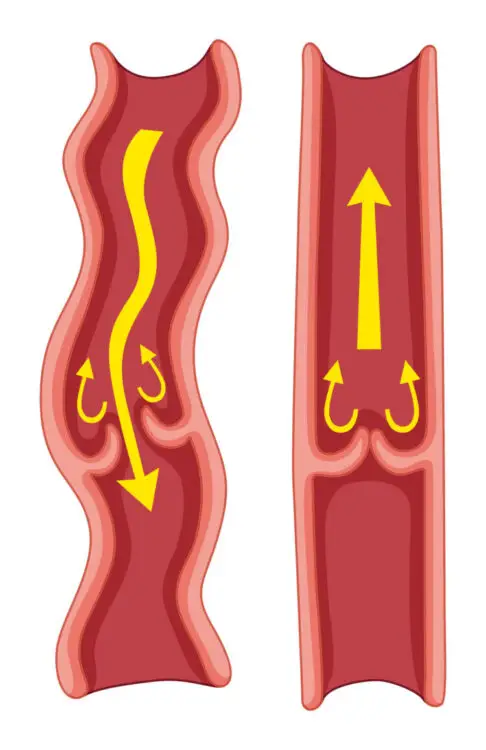
Sclerotherapy is a minimally invasive treatment in which a medication is injected into selected veins to close them from the inside. It is commonly used for spider veins, reticular veins and some varicose veins, depending on the venous map.
Who Is a Good Candidate?
Sclerotherapy may be suitable for patients with cosmetic spider veins, small superficial varicose veins or residual branches after main vein treatment. If there is significant saphenous vein reflux, treating only the visible branches may not be enough.
How Is the Procedure Performed?
The physician injects the sclerosant into the target vein with a fine needle. The inner wall of the vein reacts to the medication, collapses and gradually closes. Over time, the treated vein fades as the body absorbs it.
Possible Side Effects
- Temporary bruising or tenderness
- Brownish pigmentation along the vein
- Small trapped blood areas
- Itching or mild swelling
- Rare allergic reaction
- Rare clot extension requiring medical attention
Aftercare
Walking is usually encouraged after treatment. Compression stockings may be recommended depending on vein size and the treatment plan. Sun protection is important when pigmentation risk is a concern.
Sclerotherapy or Laser?
These methods are not rivals; they treat different problems. Endovenous laser is often used for larger refluxing veins, while sclerotherapy is frequently used for smaller branches and spider veins. A proper Doppler map determines the sequence.
For related procedures, see Foam Treatment for Varicose Veins and Laser Treatment for Varicose Veins.