

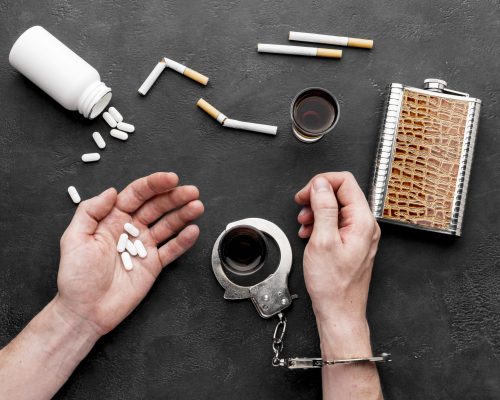
“Once you start blood pressure pills, you’re trapped for life.”
“These drugs make you dependent — your body can’t manage without them.”
“When I stop, my pressure shoots up, so I must be addicted.”
I hear these sentences often in clinic and in everyday conversations. The fear is understandable: high blood pressure is usually silent, and treatment often lasts for years. But most of that fear rests on an urban myth. The short answer is clear:
No. Blood pressure–lowering medicines are not addictive in the way people usually mean.
Disclaimer: This article is for general education only. It is not advice to start, stop, or change any medicine. Manage hypertension with your own physician. Do not stop your medication on your own.
What do people mean by “addiction”?
In everyday language, “addiction” often mixes three different ideas:
- Substance addiction — craving, loss of control, continued use despite harm, and drug-seeking for pleasure or relief of craving.
- Physiological adaptation / rebound — an opposite reaction when a medicine is stopped abruptly.
- Long-term treatment of a chronic disease — needing medicine because the disease is still there.
Antihypertensive drugs do not belong in the first group. ACE inhibitors, angiotensin receptor blockers (ARBs), calcium channel blockers, many beta blockers, and diuretics are not “feel-good” drugs. Patients do not crave them. Most people ask the opposite question: “Can I stop someday?” That pattern is the opposite of addiction.
Why are they taken for years?
Because hypertension is usually a chronic condition. These medicines rarely “cure and finish” the problem the way an antibiotic can clear an infection. They help keep pressure inside a safer range.
Think of glasses: you see better with them; when you take them off, vision blurs again. That does not mean glasses caused addiction. It means the underlying problem is still there. Blood pressure medicine often works the same way:
- With the medicine, pressure is controlled.
- After stopping (especially suddenly), pressure often rises again.
- That rise does not mean “I became addicted.” It usually means the disease is back out of control.
In some people, weight loss, less salt, regular activity, treating sleep apnea, and cutting alcohol can allow a dose reduction — and occasionally a carefully supervised stop. There is no single rule that “everyone stays on the same dose forever.” But “starting treatment = addiction” is still false.
Rebound effect ≠ addiction
The myth is fed by one common experience: “I stopped the pill and my pressure spiked — so I’m addicted.”
Some blood pressure medicines — especially certain beta blockers and centrally acting drugs such as clonidine — can cause rebound hypertension, palpitations, tremor, or restlessness if stopped abruptly. That is not because the drug created a craving-based addiction. It happens because systems the drug was damping are suddenly released.
Useful distinction:
| Addiction | Rebound / abrupt withdrawal response | |
|---|---|---|
| Purpose of use | Pleasure / craving relief | Blood pressure control |
| Craving | Present | Absent |
| After abrupt stop | Withdrawal + seeking the drug | Pressure rise, palpitations, etc. |
| Right approach | Addiction treatment pathway | Gradual taper under medical care |
Feeling worse after a sudden stop proves the medicine was doing a job — and that some drugs need tapering. It is not proof of addiction.
The real danger: quitting out of fear
This myth is not harmless. Because of it, some patients:
- take the medicine only “now and then,”
- stop when a home reading looks “good,”
- cut the dose without advice,
- or never start at all.
Uncontrolled high blood pressure quietly raises the risk of heart attack, stroke, heart failure, kidney damage, and faster arterial disease. Feeling well is not the same as being safe. Hypertension often causes no pain while damage accumulates.
As a cardiovascular surgeon, I say this plainly: many severe cases we see sit on years of poorly controlled pressure. Fear of medicine can cost more than the disease itself.
“My body can no longer regulate pressure on its own” — true?
Not in that exaggerated sense. These medicines act on kidney–vessel–nervous system pathways; they do not make the body “lazy.” When pressure rises after stopping, the underlying tendency — arterial stiffness, genetics, weight, salt, stress, age — is usually still there.
In selected patients with long-term good control and strong lifestyle change, a physician may try a supervised reduction. That is a clinical reassessment, not a “detox from addiction.”
Side effects exist. Addiction does not.
Antihypertensives can cause side effects (cough, ankle swelling, fatigue, electrolyte changes; rarely serious reactions). A side effect is not addiction. Often the class is changed or the dose adjusted. “This drug did not suit me” is not the same as “all blood pressure drugs are addictive.”
Do not confuse antihypertensives with sedatives, sleeping pills, or certain pain medicines — different families, different risks.
When should you contact a doctor?
Do not delay if:
- you want to stop because of side effects,
- pressure stays high despite treatment,
- home readings are very low or highly variable,
- you are pregnant or planning pregnancy,
- a new illness or new medicine has been added,
- you have headache with warning features, chest pain, shortness of breath, facial/arm/leg weakness, or speech trouble — these may be emergencies
Stopping “so I don’t get addicted” is the wrong plan. The right plan is to log your readings and review the regimen with your clinician.
Practical takeaway — why the myth fails
- Blood pressure medicines are not addictive. They do not create craving or drug-seeking.
- Long-term use reflects a chronic disease, not addiction.
- A rise after stopping usually means lost control or rebound — not proof of addiction.
- The real hazard is irregular use or unsupervised quitting driven by fear.
- The right next step is to discuss side effects or dose reduction with your doctor — not to stop in silence.
Let’s put out another urban myth: blood pressure medicine does not imprison you. Controlled pressure is a quiet shield against stroke, heart attack, and kidney damage.
For an assessment suited to your situation, you can request an appointment via the contact page or read more on the about page.
Key references
- World Health Organization. Hypertension. WHO Fact Sheet. — who.int
- Whelton PK, et al. 2017 ACC/AHA Guideline for the Prevention, Detection, Evaluation, and Management of High Blood Pressure in Adults. Hypertension. 2018.
- McEvoy JW, et al. 2024 ESC Guidelines for the management of elevated blood pressure and hypertension. Eur Heart J. 2024.
- American Heart Association. Understanding Blood Pressure Medications. — heart.org
- Literature on antihypertensive withdrawal / rebound responses after abrupt cessation (notably beta blockers and clonidine).