

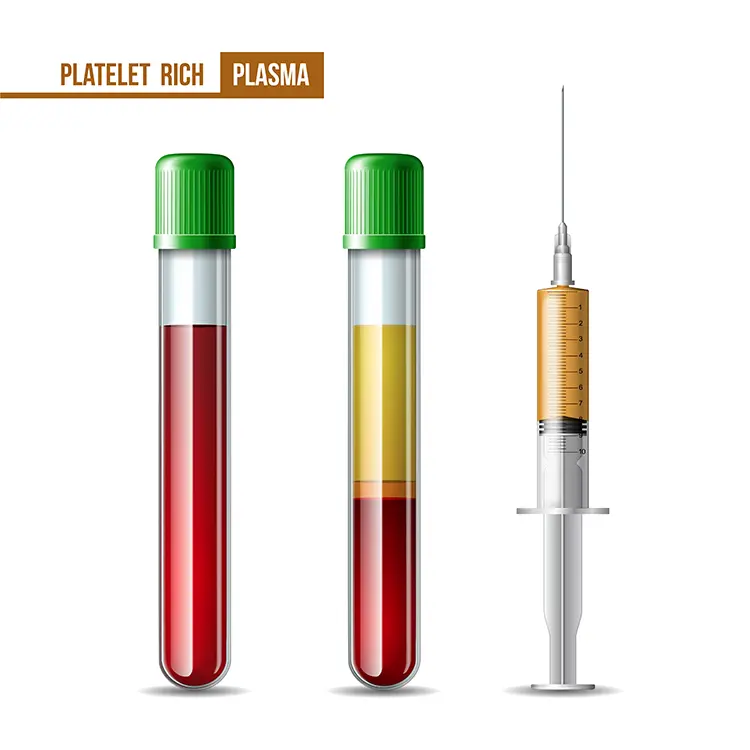
PRP, or platelet-rich plasma, is prepared from the patient’s own blood and contains a concentrated platelet fraction. In chronic wounds and tissue repair, it may be considered as an adjunctive treatment in selected patients.
How Is PRP Prepared?
A blood sample is taken from the patient and processed to separate platelet-rich plasma. The preparation method, platelet concentration and application technique can vary, which is why standardized practice matters.
How Might PRP Support Healing?
Platelets release growth factors and signaling molecules involved in tissue repair. PRP may help support the local healing environment, but it cannot compensate for untreated infection, pressure or poor circulation.
What Does the Evidence Say?
Clinical evidence differs by wound type, PRP preparation and patient selection. Some studies suggest benefit in selected chronic wounds, but PRP should not be presented as a guaranteed cure.
Which Wounds May Be Considered?
- Selected diabetic foot wounds
- Slow-healing wounds after circulation is optimized
- Venous ulcers with proper compression
- Selected tissue repair needs after specialist evaluation
What Is Evaluated Before PRP?
- Blood flow
- Infection
- Wound depth and tissue condition
- Blood sugar control
- Medication and bleeding risk
- Nutrition and smoking status
Is PRP Safe?
Because it is prepared from the patient’s own blood, allergic reaction risk is low. Still, sterility, correct indication and medical supervision are essential. It may not be suitable for every patient.
Why Is Follow-Up Important?
Wound size, depth, infection signs and tissue quality should be monitored. If the wound does not improve, the diagnosis and treatment plan should be reconsidered.